
GirlDreamer began in 2016 with just £50, a bowl of guacamole, and a simple idea: create a space where women of the global majority could show up as themselves and be seen.
That first gathering—Girls Night In—sparked a movement. From community events to leadership programmes, we’ve grown into a national ecosystem supporting changemakers through funding, access and care.
What began as a third space became a pathway. And today, we exist to ensure many more women can build their own. Here’s how we make that happen:
At GirlDreamer, we’re driven by a dual commitment of fostering community and catalysing social change.
Our core service exists in two parts that work hand-in-hand. Our Dream Fund, where small grants ignite big changes that are often the seed funding required to bring visionary ideas to life and our capacity-building programme. Here we nurture the holistic development of our Dream Fund leaders and create tailored space for growth and learning.
The importance of these services going hand-in-hand cannot be overstated. It’s the fusion of financial support and capacity building that creates the synergy needed for women of colour-led organisations to not only thrive, but to blaze a trail of representative leadership and social transformation. Together, they form a powerful force for change, shaping a more representative and equitable future.
Redistributing resources. Backing bold beginnings.
The Dream Fund is our micro-granting initiative that offers flexible, accessible funding of £2,500 – £5,000 to young women of the global majority who are at the early stages of creating social change. Whether you’re an organiser, a founder with an idea, or running an unconstituted group – we fund the person or the collective, not just the paperwork.
We created the Dream Fund to disrupt traditional funding models that are often gatekept, rigid, and out of touch. Our approach removes unnecessary red tape, trusts lived experience as expertise, and ensures that underrepresented changemakers can access the support they need, when they need it.
But funding is just one part of the ecosystem. Dream Fund recipients often go on to take part in our programmes or co-create our healing spaces – bringing their insight back into the community and sustaining the cycle of leadership, wellbeing, and collective growth.
Our programming nurtures a culture of leadership, social entrepreneurship, and community wellbeing. Through masterclasses, roundtables, research, capacity-building, and access to places and spaces where power sits, we support young women of the global majority to gain greater access to opportunities that align with their purpose and ambitions.
Our programmes are designed to remove early-stage barriers that often prevent these women from stepping into leadership or launching their own ventures. Rather than expecting them to ‘fit in’ to outdated systems, we focus on building alternative pathways—ones that recognise lived experience, reimagine leadership, and root confidence in community. Each programme is woven into our wider ecosystem, connecting back to our funding and healing spaces to create holistic, lasting support.
This programme is offered in conjunction with the Dream Fund, and all registered applicants will be invited to join the quarterly programme.
Each quarter, we open the Dream Fund for applications, giving you the opportunity to apply online for grants ranging from £500 to £2,500 for your project, movement, or organisation.
If you happen to miss one round, don’t worry! There are four DreamFund rounds annually that you can apply to.
To stay updated and be among the first to know when the fund is released, ensure you’re subscribed to our mailing list as we share the news of new funding availability here first. You can also visit our opportunities page to apply directly and seize your chance to make a difference.
This summer, we have seen the popularisation of the term 'The Soft Life'. We have been inundated with it. It seems like all of a sudden, everyone is living a 'Soft Life', and yet most of us still don't know what it means.
To put it shortly, a Soft Life is a radical act of prioritising stress-free living. In living a Soft Life, you prioritise your well-being and reject toxic notions of hustle culture.
For so long, we have consumed messages that encourage us to have multiple streams of income, work 24 hours a day, own a home before 30, and live a life of luxury and excess. A Soft Life encourages you to let go of this pressure and acknowledge the toxicity of these notions.
A Soft Life is antithetical to what we have known of 'hustle culture'. It is the diametrical opposite of overworking and 'girl boss culture'.
To live a Soft Life is to understand that it is truly unhealthy to work seven days a week, to monetise every hobby, and to have no boundaries with your work. In living a Soft Life, you do less, slow down, live a balanced lifestyle and let go of the pressure and depleting nature of endless work.
Of course, we know that it is easier said than done. To live a Soft Life seems like a luxury, and it is antithetical to what we have been taught about professionalism and adulthood. Although it might seem unattainable, there are simple changes that can be made to help you live your best Soft Life.
Living a Soft Life applies to both your personal and professional life. In your personal life, it means you advocate for yourself and your peace. You prioritise your well-being and stress-free living. You understand that it is not about living in denial or rejecting the hardships and difficulties of life, but an act of self-preservation. In living a Soft Life, you understand that there is only so much you can control, and the challenges you experience are often out of your control. In living a Soft Life, you set a standard of well-being that you work to achieve and sustain.
Professionally, in living a Soft Life you create and sustain a healthy work-life balance. You work only when you are being paid to work. You do the tasks you are assigned and no more. You remember that your job is just that, a job.
As WOC, we experience more barriers, challenges and hardships than most. We must prioritise ourselves and our well-being. In living a Soft Life, you take back your freedom and radically improve your quality of life.
Closing a chapter and turning over a new leaf of life seems smooth in theory, however, it is in fact very strenuous in its practice. Having closure and moving forward requires a lot of courage and strength. Though the journey itself is like burning the candle at both ends, it really is never too late to start over.
Our experience shapes us into who we are, our journey reflects the choices we make, the choices we own and the lesson we learn.
The fear of either re-doing a life phase in a different manner hoping for a positive outcome or getting out of a situation altogether can create a pang of anxiousness. However, hoping for a better future, striving to become a better version of yourself, and breaking out from a trail of toxicity can act as a driving force in shaping our bravery, resilience and positivity.
Starting over means different things for different people. When starting over it is important to remember that you:
Take Risks
Beginning a new chapter of your life can create discomfort and can push you out of your comfort zone. Taking risks is important in any new chapter of growth. Risk encourages you to rely on and believe in yourself.
Remember To Do it for Yourself
Starting over and letting go of stressful situations will shape you, your character and your outlook on life. Proving yourself to yourself will always be more important than proving your capabilities to society. Your opinions and feelings about yourself should always hold more weight and importance than those of others. You should always be your biggest advocate.
Learn What you Can
The hard work you do, the striving and yearning to reach the silver lining is all a part of the journey. This journey can turn into an experience offering important and rewarding life lessons. The lessons you learn can help you grow in your confidence and capability, renew your passions and leave you feeling more enlightened and excited about the next chapter.
Written by: Ai Narapol
Why this place?
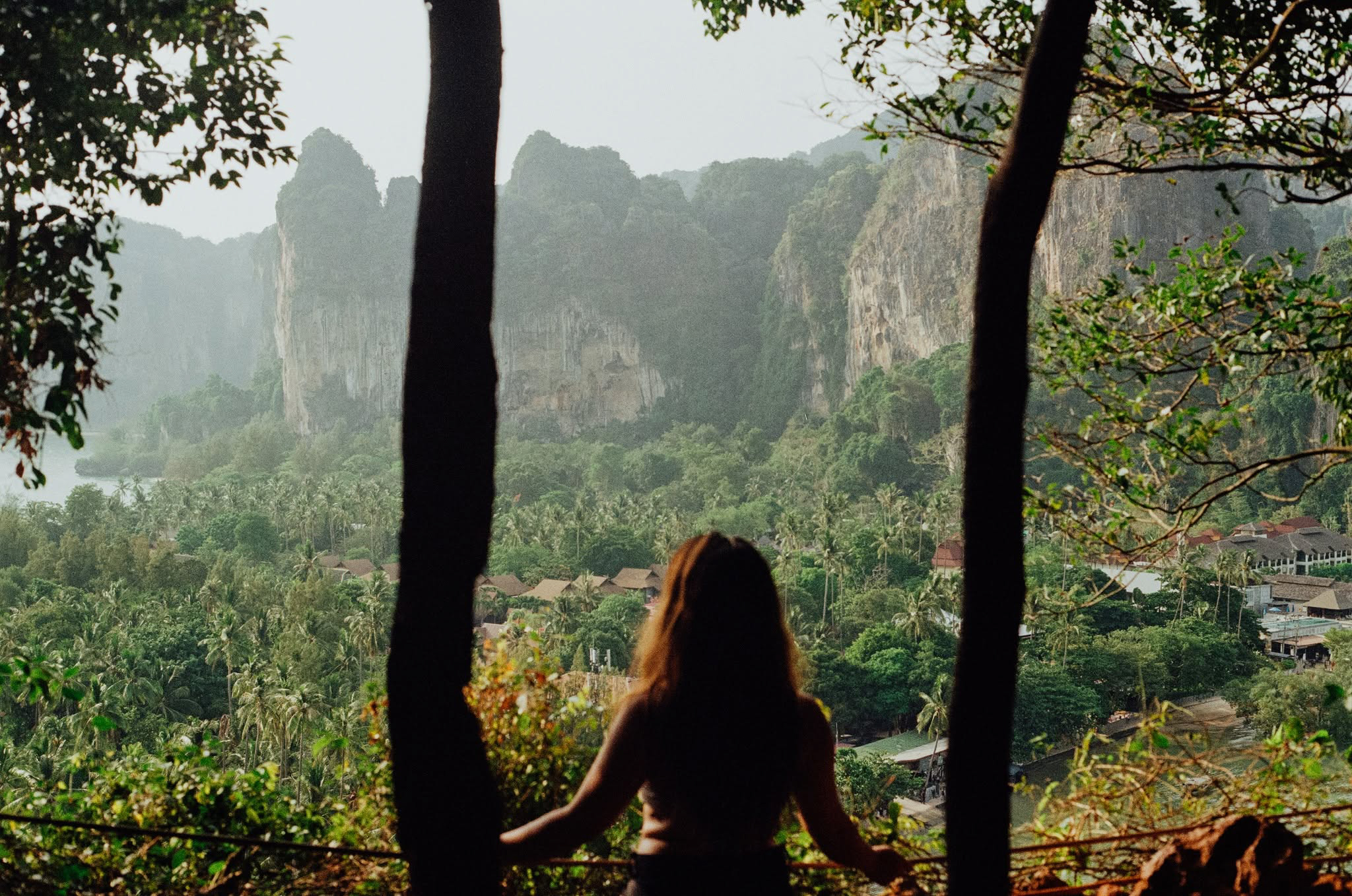
It’s known as a tourist destination, but because it’s more secluded and less accessible, most visitors tend to come for a quick day trip rather than stay overnight. By sunset, the beaches are often almost completely empty, giving you the feeling of having them all to yourself.
Because it’s not as easily accessible for families, it tends to attract a younger crowd, making it a popular spot for young travellers.
Must-do experience
I’m not much of a beach person - I can’t even swim! But there’s something really special about heading to Phra Nang Beach, renting a kayak for just £5 for two hours, and exploring the coastline.
There aren’t many boats around either, so the water is often calm and peaceful.
It’s also a stunning spot for rock climbing if you’re into that, with the dramatic limestone cliffs making the whole experience even more memorable.
Favourite place to eat or drink
I don’t have one particular place to recommend, but I was genuinely surprised by how affordable the food was. It felt comparable to other popular holiday destinations like Phuket, without ever feeling like you were being ripped off.
That said, I’d still recommend seeking out the more local-looking vendors. They tend to take more pride in their food and are focused on satisfying local customers, which often makes for a much more authentic experience.
Hidden gem
There’s a cave on Phra Nang Beach called the Nang Cave Shrine (Princess Cave), which is filled with carved wooden phallic symbols left as offerings to the fertility goddess. It might seem a little unusual or even silly at first, but for me, it represents something much more meaningful: hope.
Fishermen also come here to pray for good luck and protection before heading out to sea.
This is one of the things I love about Thailand - people still hold onto and cherish their traditions, even as the country continues to modernise.
Best time to visit
The best time to visit would be in April, during the Songkran Festival. Thai people are gearing up to celebrate the New Year, so there’s an incredible energy and sense of excitement everywhere you go.
It is also the hottest time of year, but the trade-off is that it’s generally less busy, as the main tourist season comes to an end in March. If you don’t mind the heat, April is a great time to experience Thailand with a more local, festive atmosphere.
Top tip
Everything you need to know about Thailand is easily accessible online, but if you want more of an adventure, don’t be afraid to ask the locals. Thai people are incredibly welcoming and are often more than happy to help point you in the right direction.
One practical tip: definitely get an eSIM or 5G SIM card when you arrive. You can pick one up at the airport or even at 7-Eleven, and having reliable data will be your lifeline for maps, translations, bookings and getting around.
That said, Railay felt incredibly safe, so don’t be afraid to put the phone away sometimes and just explore.
Fun fact or memory
I remember thinking how touristy these places in the south would be, but I was genuinely surprised by how much natural beauty there was. Despite the tourism, there was still this incredible sense of freedom and escape.
Even now, thinking back to it gives me goosebumps. It’s one of those places that stays with you long after you’ve left.
Ideal for…
Thailand really does have something for everyone, including families. It all comes down to what you’re looking to get out of your trip. Whether you want adventure, parties, a relaxing getaway, or simply to meet new people, there’s a destination and experience to suit you.
The key is to do a little research before you go and figure out which areas best match the kind of trip you want. And with Thailand being so affordable, you can experience a lot without breaking the bank.
There are also plenty of YouTube videos and online guides that can help you plan. Do a bit of research beforehand, but leave some room for spontaneity too - some of the best experiences can come from simply seeing where the journey takes you.
Written by: Zainab Al-Farabi
Why this place?
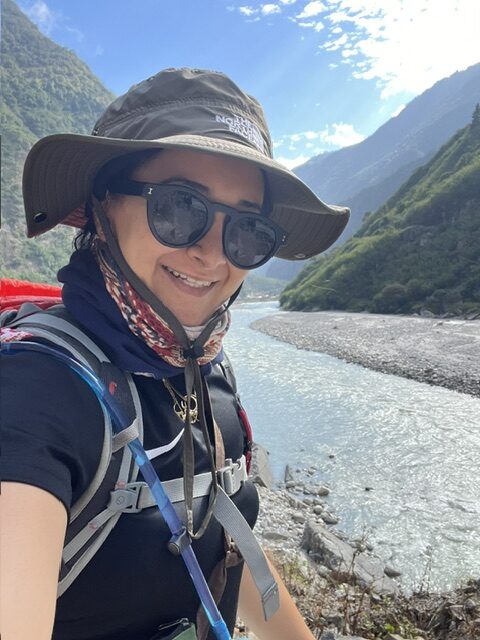
The incredible nature and landscapes, the quaint villages and teahouses on the hikes up in the mountains, the warm and proud people who are generous and so funny!l
With the recent devastating and fatal floods striking Nepal, it may not be your top choice. However, our Nepali trekking company put out a message that they need treks to continue as it sustains their livelihoods: “The major trekking routes remain safe and open, and your visit right now means more than ever for the communities that depend on it.
Nepal is hurting after the floods in Rasuwa, but the the Himalayas are still standing and so is Nepal. ” - Discovery World Trekking
Nepal is also very spiritual and care deeply about the earth and the mountains - they have colourful flags everywhere including up in the mountains which are prayer flags, locally called lung ta ("wind horse") or lhung dar. They spread blessings, peace, and good fortune as the wind blows through them. Each colour represents a natural element and a life virtue: https://www.mountainkingdoms.com/blog/article/the-meaning-of-prayer-flags
Must-do experience
What’s one thing you absolutely shouldn’t miss?
A Himalayan trek of course! I did the Annapurna Circuit over 11 day. You can do shorter ones (or longer!) but bear in mind it’s important to acclimatise properly to the heights otherwise you will get altitude sickness. The Annapurna circuit’s peak is 5416m above sea level.
I recommend going with a local Nepalese trekking company and guides. This ensures money goes back into the local economy rather than western travel companies.
We went with Discovery World Trekking who also do smaller tour groups which felt more intimate with more Nepalese guides supporting you and an opportunity to get to know them and the other trekkers better which was a highlight. We had so much fun with our guides and the other trekkers, playing games and doing lots of Nepalese dancing before starting our hike each day!!
https://www.discoveryworldtrekking.com
Favourite place to eat or drink
Yangling Tibetan Restaurant in Kathmandu for the best momo’s
Forest & Plate in Kathmandu for delicious fresh salads
If you’re after a treat after your hike an amazing Nepalese dinner experience at Bhojhan Grihan hotel
Best coffee spot
Kathmandu: 4 Stories
Himalayan Java Coffee Company
Hidden gem
Definitely a treat place after a hike as it’s a bit spenny but The Pavilions Himalayas The Farm in Pokhara, the area people usually go to unwind after a trek. It was beautiful and just what I needed after an 11 way trek!
Best time to visit
I went in November - October to November is best for clear mountain views and peak trekking, or March to May for warm weather and blooming flowers apparently
Top tips
Fun fact or memory
Ideal for…
Anyone who is after a big and unforgettable adventure!
Given the horrific loss of life and damage, with people still missing following the recent flood, if you are able to donate what you can, please do via this centralised government link to support a coordinated response: https://pmdrf.nchl.com.np/ ?
Why this place?
Incredible scenery, food and people. An underrated spot for sure, can see why it’s hitting peoples bucket lists.
Must-do experience
A sunset visit to Lëkurësi Castle, Sarandë. Suburb views, free entry, nice and cosy with a drink from the bar. Also the option to dine if you’d like too.
Also, a wonder around Gjirokaster for the history.
Favourite place to eat or drink
Albania Riveria: SEAFOOD is a must. Pizza's are also highly rated (bizarrely).
The traditional Albanian food e.g. Byrek, Qofte, xaxiq were great too but as an allergy sufferer *nuts & tomato emoji* Seafood was my safe haven.
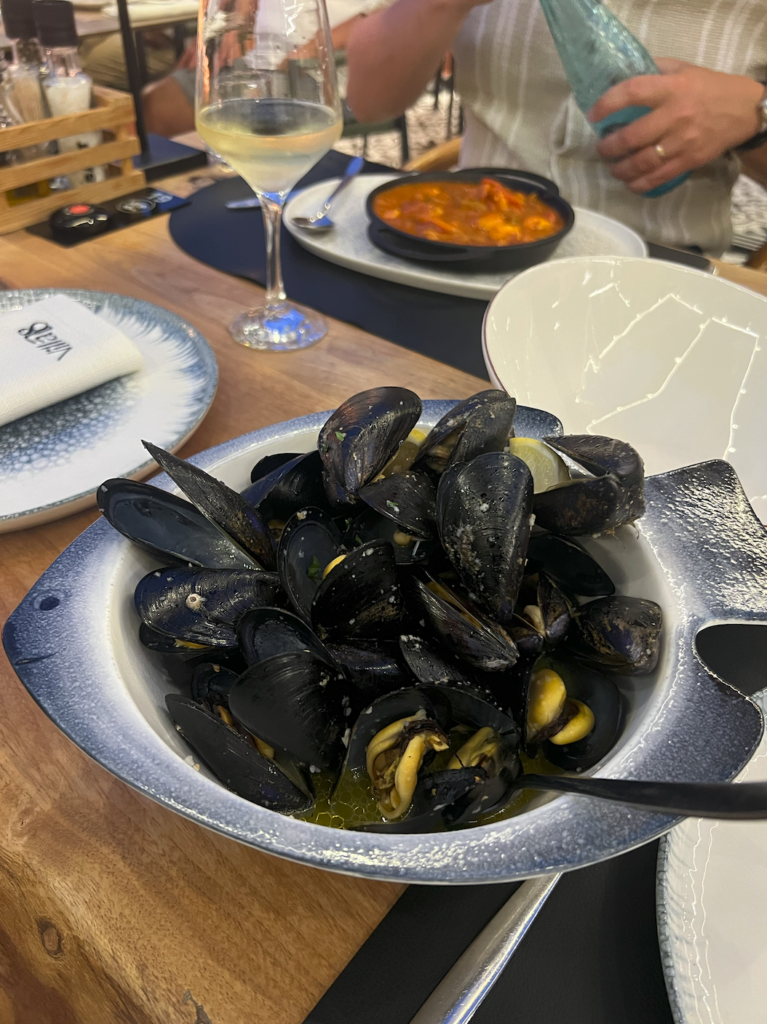
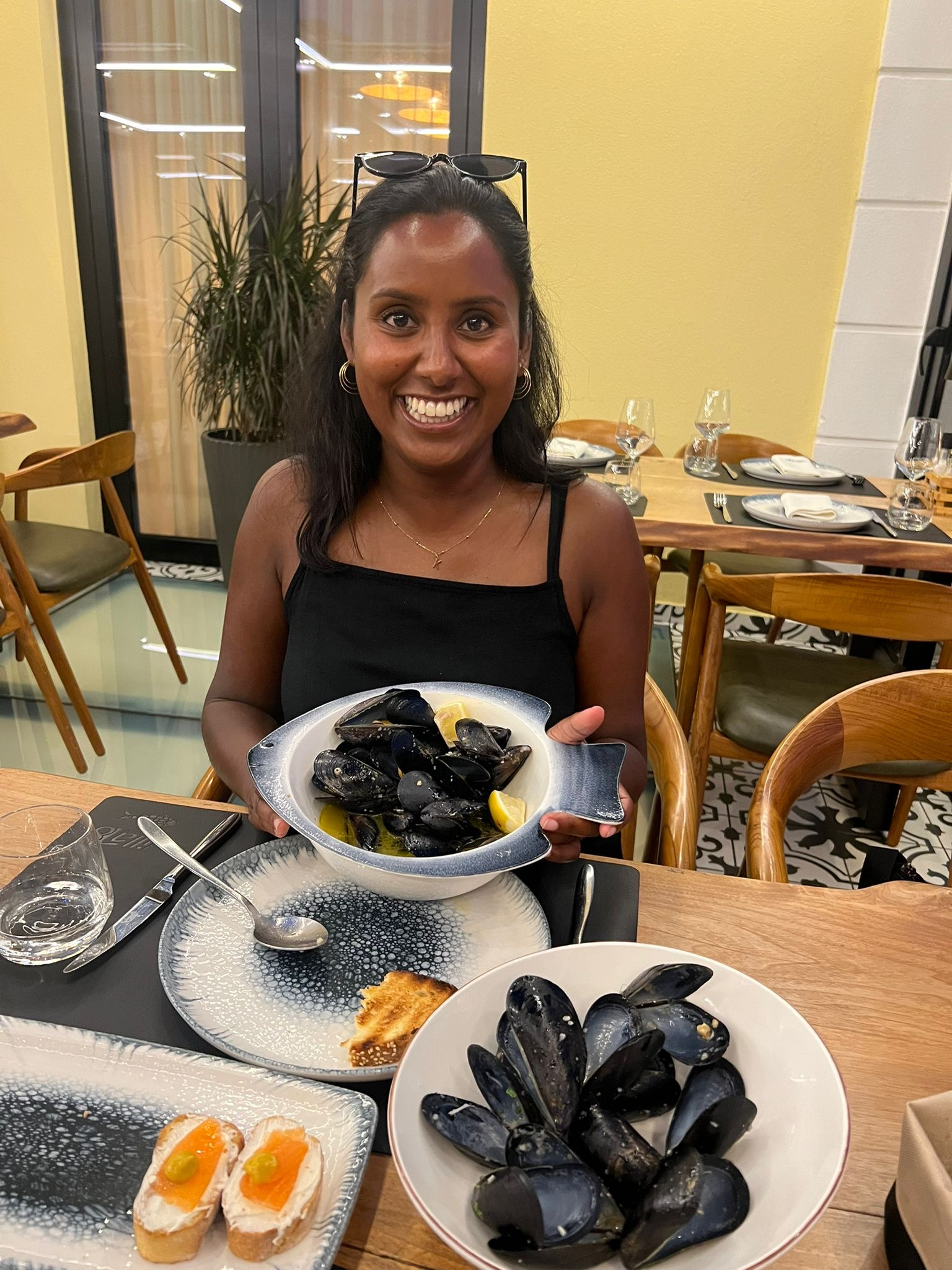
The majority of restaurants on the Albania riviera rate so highly in seafood in my opinion. My go to meal was Seafood Linguini & mussels for starters (I would eat this all day everyday if I could), alongisde their baked hard white cheese. *chefs kiss*
If you’re in Tirana, highly recommend checking out Villa 68 for their mussels.
Best coffee spot (optional but great if coffee-themed)
Not really a coffee drinker in 35degree heat so plugging seafood again in general across the country (coastal regions specifically)
Random fact: Water in the airport is roughly 90Lek = 82p GBP, showcasing the affordable costs for food and drink across the country for us as tourists. Sadly, not the case for locals though.
Wine and Beer are a few euros too!
Hidden gem
Himarë is a beautiful stop off point on the way to Sarandë. Sarandë is worth the stay - more affordable, quiet, good night life vs Ksamil) which is more of a day trip and was absolutely heaving with people.
Berat is also definitely worth it but no more than a day is really needed.
Pulebardha Beach, Ksamil - highly recommended. Clearest water with a cute cafe/bar and like no people at all. They do a smashing mango ice cream too.

Best time to visit
Early Summer, June is typically mid 30’s. Avoid peak summer unless you are made of steel (heat wise).
An increasingly popular country that’s hitting people’s travel lists. I can definitely understand why, such an underrated country which is absolutely gorgeous. The landscapes are stunning, & the people are so welcoming and friendly.
Top tip
Renting a car makes travelling around Albania much easier!! Their transport system isn’t the strongest and being able to explore multiple places is made easier from the comfort of a rental car. If aiming for specific spots like sarandë / Ksamil ( the Maldives of Europe) flying into Corfu, getting a ferry across can be more convenient. It’s around 4 - 5 hours if driving down from Tirana Airport, otherwise.
Mosquito spray is a must!! (was eaten alive on day 1)
Carry cash, a mixture of Lek (closed currency so taken out once you arrive) and Euros will come in very handy. Smaller shops for souvenirs or even snacks are usually only payable by cash. In Tirana and for bigger restaurants, card works perfectly fine.
Fun fact or memory
Albania was actually not on my travel list. I found myself here as a result of a friend's wedding and luckily we all got to experience traditional Albanian dancing.
Ideal for…
(Sea)Food lovers, nature lovers, beach hoppers, great for groups / couples.
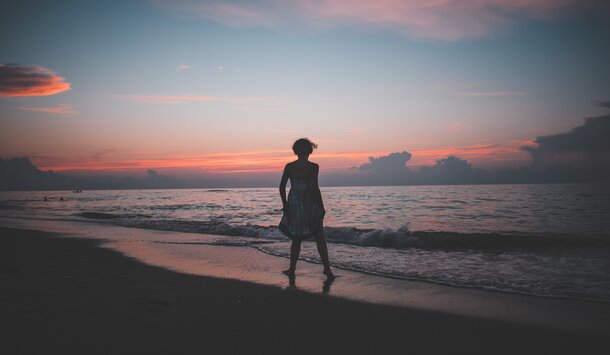
Gratitude in the realm of fundraising exists to please the donor. Those of us who work in social impact are tasked with telling the stories of our programmes — stories engineered to produce emotional affect, primarily through pity or aspiration. At the crux of it, the donor must feel good about themselves. And so, in practice, we must all be grateful for their generosity. We must perform it. We must embody it.
But after spending the first years of my career as a fundraiser — and identifying as a Jamaican-born, British woman — something did not sit well with me. Most charity in the UK disproportionately supports marginalised people of colour. And when I held that fact up against the context in which charity sits, I found it very hard to be grateful. I want to zero in on why.
I have spoken at length in previous pieces about the pride I take in my African ancestry — the sense of strength I draw from the resilience and bravery of my ancestors. That pride lives alongside an embedded rage. A rage for the profound lack of atonement from the British Empire — the empire that extracted the wealth, the free labour, the suffering, and the sheer brutality of my people, and returned it in slim pickings with feigned apologies and brief acknowledgements.
The ground I walk on in Brixton is built from that wealth. The palaces tourists gaze at were built from gold mined from landscapes I should have been reared in, if it weren't for colonialism.
Here is the reality in a few sentences.
Scholars estimate the British Empire extracted over £35 trillion in wealth from its colonies across Africa, the Caribbean, and Asia — through enslaved labour, stolen natural resources, and the organised theft of entire economies. Britain extracted an estimated £7.5 trillion from African countries through the slave trade alone. When abolition finally came in 1833, the British government borrowed £20 million to compensate — not the 800,000 enslaved Africans who were freed, but the slave owners, for the loss of their so-called property. That debt was not paid off until 2015. Which means that Black British people — descendants of the enslaved — spent generations paying taxes that serviced a loan taken out to compensate the people who owned their ancestors. Not one penny of reparations has ever been paid to the people who were enslaved or to their descendants. And in 2014, when a coalition of fifteen Caribbean nations presented a formal reparations plan to the UK government, the response was simple: off the table. If you take the Brattle estimate for slavery alone (~$107 trillion) against the roughly $1–2 billion actually delivered for colonial-era wrongs specifically, recipients have received well under 0.01% of what's been calculated as owed. Even using more conservative academic estimates, the delivered amount is a rounding error.
Meanwhile, today, more money flows out of Sub-Saharan Africa than flows in. In 2015 alone, over $203 billion left the continent — extracted through corporate profit repatriation, debt servicing, and the ongoing economic structures of what some researchers are now calling a second empire. The aid that does arrive — the slim pickings of donor benevolence — does not come close to covering the gap.
So. Forgive me if I'm not particularly grateful.
Because the ground I walk on and the life I live are built from ongoing extraction. Marginalised communities, in the grand scheme of things, never see that wealth returned — and the effects are intergenerational, profound, and deliberate. Perpetually impoverished. Perpetually positioned as recipients of someone else's charity. Perpetually asked to smile and say thank you.
It is in that reality that I say this clearly: women of colour and marginalised communities around the world should not live, work, or walk in the energy of indentured servitude. We are not the recipients of generosity. We are the inheritors of what was stolen.
And let us be precise about what that benevolence actually looks like in practice.
Despite Black, Asian and minority ethnic communities making up around 14% of the UK population, independent funders — trusts and foundations — consistently fail to distribute anything close to a fair share of grants to those communities. Research found that up to 87% of micro and small voluntary sector organisations led by Black and minority ethnic people did not have enough funds to last more than three months during the pandemic — and were simultaneously the least likely group to receive financial support. Not because the need wasn't there. Because the architecture of charitable giving was never designed with us at the centre.
When state funding for the voluntary sector declined, the reduction in income reported by Black and minority ethnic-led organisations was between 25% and 28% — significantly higher than the sector average. The institutions with the most resources pulled back furthest from the communities with the least.
And when money does come, it comes with conditions. Short-term funding cycles and exclusion from capital opportunities continue to leave many Black-led organisations in survival mode — unable to scale their impact or build lasting financial independence. You get a grant for twelve months. You spend ten of those months reporting on it and three trying to find the next one. There is no pathway to power in that model. There is only the management of perpetual crisis.
There are documented cases of Black charity leaders being consulted by funders to help design grant programmes — then rejected when they applied to those same funds. Asked for your expertise and then told you're not experienced enough. Your lived knowledge extracted for free, your application declined. If that is not a microcosm of the entire colonial project, I don't know what is.
White-led organisations hold budgets that are on average 24% larger than those led by Black people. And when it comes to unrestricted donations — the kind of funding that actually allows an organisation to make its own decisions — Black-led organisations receive 76% less than their white-led counterparts. Seventy-six percent. Not a gap. A chasm. And within that chasm, we are still expected to perform gratitude.
The 2020 Black Lives Matter movement produced a spike in giving to Black community organisations. But the increase was followed by a marked decrease in the months that followed — exposing the donations for what they were: conscience money, crisis philanthropy, here today and defunded by December. And still, we are asked to write a thank you letter.
Very often, marginalized and racialised communities build their organisations out of a desperate need to address a social ill that the state refuses to name, let alone fix. We create out of necessity what institutions will not provide. And then we are invited to compete — on unequal terms, through inaccessible processes, assessed by people with no proximity to our realities — for a fraction of the resources required to address problems that were, in many cases, created by the same institutions now dispensing the grants.
In the context of GirlDreamer's Dream Fund, we are acutely aware of these realities — because we live them. We are ourselves a marginalised organisation. Twelve rejection letters and counting. Twelve times told, in the polished language of grant criteria, that what we are doing is somehow not quite good enough. And each time, we have had to hold that disappointment alongside the irrational, necessary, non-negotiable belief that it is. Because if we don't hold it, no one else will.
What makes it more painful is the simultaneous task we carry: having to deliver that same rejection to multitudes of women of colour who are trying to do exactly what we are — trying to interrupt the cycle, trying to improve this broken illusion of the circular economy. The cycle of deprivation does not skip a generation because someone filed a grant application. It requires structural interruption. And yet we are perpetually under-resourced to deliver it.
Because in every facet of society, we are underinvested in. Female-founded businesses receive just 2% of venture capital funding in the UK. And when race enters the equation, the picture becomes almost incomprehensible: Black women founders raised just 0.14% of all venture capital investment over the entire decade between 2013 and 2023. Not 14%. Not 1.4%. Zero point one four percent. Over ten years. A 2023 British Business Bank report found that only 3% of individuals in senior investment positions in UK VC were women from ethnic minority backgrounds — and zero Black women were found in positions of seniority at the time of the study. The people deciding who deserves capital do not look like us. They never have. And the numbers reflect that perfectly.
From venture capital to the charity sector, from boardrooms to grant committees — women of colour are underinvested across the board. This is not a coincidence. It is architecture.
But beyond the funding gap, there is something even more insidious at work. We are all, in various ways, subjected to the longer con of indentured servitude — dressed up as opportunity.
Take the mortgage. Take a university degree. What is consistent across Western societies is the structural requirement to keep the population indebted to an elite that has no intention of releasing that debt. In exchange, you are promised a job, a home you may technically own by the time you retire, good health, security. The slim promise of eventually arriving somewhere worth calling a life. None of it is guaranteed in any absolute sense. And the cruelest part is that you are so consumed by the future — the pension, the promotion, the postcode — that you cannot be present in the one life you are actually living. We are perpetually reaching toward timestamps that don't really exist. Chasing ideals designed by institutions that profit from the chasing. All to reach some semblance of being worth it. When worth was never the thing being measured.
So I am telling you to stop. To smell the roses. To become your own anthropologist.
Observe the world as you know it. Not as you have been told to know it — filtered through syllabuses and performance reviews and the quiet authority of people who had the luxury of deciding what knowledge looks like. Observe it as you have lived it. Form your hypotheses. Test them against your reality. The evidence is all around you. It always has been.
What was trained out of you was the ability to trust that evidence. Specifically, the evidence of your own emotions, your own worth, your own knowing. That trust is systematically extracted through education and beyond — through the constant requirement to seek validation from teachers, professors, employers, and institutions before ever being permitted to validate yourself. We are taught from childhood that our internal compass needs countersigning. That our experience only counts once an authority has stamped it credible.
That is not education. That is conditioning. And it has been extraordinarily effective.
The act of reclaiming your own witness — of saying I see what I see, I know what I know, and I do not require permission to say so — is, for women of colour especially, a radical one. Not because the knowledge is radical. But because the world has spent considerable energy convincing you that it isn't yours to hold.
So decide for yourself what you want from life — without seeking the answer from everywhere but inside yourself. There are so many ways to live that have nothing to do with corporate slavery or performing gratitude for crumbs. Make sure you incorporate what brings you joy. Walk tall like you own the place, because in a very real sense, your ancestors built it.
Something we hear often from GirlDreamer's Dream Fund alumni is this: we want to invest in social impact, but we will not break our backs for the cause. And they are right to say it. The charity sector is itself rigged. The amount of stress required to keep the lights on whilst trying to run the actual work is insurmountable by design. Gen Z understands this clearly — they are simply refusing to surrender their bodies and minds to employment that does not value their wholeness. The corporate ladder is no longer aspirational. And sadly, neither is the idea of working yourself into the ground for a cause, when the cause itself is trapped inside a system that ensures you can never quite catch up.
But here is where it gets complicated. And I think it needs to be said.
The progress made in Western societies over the last fifty or so years is still remarkably new. And as we are seeing everywhere — it is fragile. The freedoms that exist here, however imperfect and structurally compromised, are not universal. That is, in part, what white privilege looks like in practice: not bombs dropping on your head, but a systematic, slower dismantling — social welfare systems designed to keep you just comfortable enough not to revolt. The threat is real, but it is diffuse. And that diffusion is the point.
Which is why I am not simply telling you to rest. I am inviting you to think more clearly about what you are resting from — and what you are resting toward. Because the people of Palestine, Sudan and the Congo are not afforded the language of self-care. Neither were my ancestors. They do not get to choose between their welfare and their freedom. That is not a reason to feel guilty for resting. It is a reason to rest with intention. To let the stillness be generative rather than simply escapist.
Anything truly radical is not fought without cost. That has always been true. But the first act of resistance — the one that makes everything else possible — is the refusal to internalise the lie that you are not enough. That your ideas are not worthy. That the game being rigged says something about your value.
It does not. Your value is inherent. It was never theirs to grant. Walk tall, with pride, and understand that you have every right to be here — not because the system has decided to make room, but because the room was always yours.
Emma Bloomfield
By Zainab Al-Farabi
WHY THIS PLACE?
Incredible culture, food, people and landscapes. Diversity of activities (from cool cities to epic mountains!)
Diversity of great food from sushi, tempura to wagyu beef to ramen
MUST-DO EXPERIENCE
What’s one thing you absolutely shouldn’t miss?
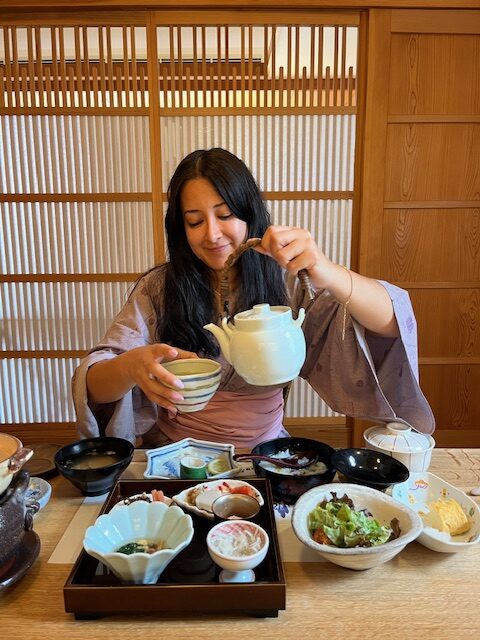
Going to an onsen (public hot spring baths) or if you’re able to staying in a Ryokan. A ryokan is a traditional Japanese in featuring tatami-mat floors, futon beds, and public hot spring baths (onsen), offering an immersive cultural experience with legendary hospitality (omotenashi). Usually located in scenic areas, these inns typically include elaborate kaiseki multi-course dinners and traditional breakfasts.
FAVOURITE PLACE TO EAT OR DRINK
Tempura: Tempura Endo Yousaka (Kyoto)
Sushi: Hashiri Shimo Kitazawa (Tokyo)
Wagyu beef: Kuishinbo Yamanaka (Kyoto)
Udon noodles: Udon Oniyanma Nakameguro (Tokyo)
BEST COFFEE SPOT
Coffee Koppell (Tokyo) - an old school cafe which serves coffee brewed through siphons. Amazing coffee, served and ran by an old Japanese couple, super cool place.
HIDDEN GEM
The historic temples and Buddhist sanctuaries are incredible - there are reportedly up to 150,000 temples and shrines in Japan.
I would avoid going to the main and famous bamboo forest which is super crowded and go to Giōji Temple which is super tranquil and you can get your bamboo pics without the crowds!
BEST TIME TO VISIT
I would say not cherry blossom season! It’s increasingly a popular tourist destination and though Tokyo absorbs tourists well places like Kyoto don’t. I went in May (post cherry blossom) which is still spring time and good weather. It was fairly busy in May so I can only imagine the hoards and crowds during cherry blossom season.
TOP TIPS
Take minimal stuff with you and buy a suitcase to load up on Japanese goodies when you’re there - vintage shopping, skincare, best matcha you’ll ever have and other Japanese delicacies… the list goes on!
Buy a prepaid travel card for Tokyo (Suica) which you can upload to your wallet on your phone.
It seemed that Japanese people tend to be more conservative with high ratings for good restaurants. 5*s seem to be rare so really good places may seem to have lower ratings compared to UK reviews.
Recommend using Tablelog which is Japan’s restaurant discovery and booking platform so you get recommendations for top rated places by locals. Anything above a 3.3 is considered very good.
FUN FACT OR MEMORY
Went to an evening of local punk bands in Tokyo - it was all in Japanese but so cool!
IDEAL FOR...
Food lovers, solo travellers, nature lovers, city lovers but also families - the transport is incredible (must ride a bullet train!) and everyone is really friendly and helps with prams etc. There are lots of exciting things and activities for kids too.
I've been reflecting a lot on the mode of "care" – not just in the charity sector, but in the community at large. The social fabric that connects us as human beings.
You see, humans became the dominant species not because of our capacity to think, but because of our social ability. That's why millions of people can create a functioning society. Why we can trade internationally. Why can millions all watch the same video? Why can we build civilisations? One person cannot do it all alone.
Yet Western civilisation has a profound need to idealise "the best". This is grounded in the idolatry of a single individual as the solution to the world's problems. This pervasiveness is rife within movements – particularly the charity sector and the fight for civil rights in the US.
My point is this: that focus is a result of individualism. Individualism is tied to capitalism – where personal goals, achievements, and the accumulation of private capital are held in higher regard than the social welfare of the collective. That is the hallmark of Western civilisation, tainting everything we experience or work through.
That is why funding structures and the charity sector's labour are still graced by this presence, no matter what kind of community we claim to build. We're still propelled to attach our movements to celebrity ambassadors – people who do not lay their bodies on the line like Martin Luther King or Rosa Parks. (Perhaps the most grounded exception is Muhammad Ali, whose soul rippled across generations.)
This is why our organisations remain hierarchical. Why the sector is still rife with systemic "isms" – products of the twins colonialism and capitalism.
In this blog, I want to centre a meditation on care. At GirlDreamer, we want to centre care around the Dream Fund – providing a holistic approach to working with participants, seeing the whole human being. Within that remit, I'd like to philosophically analyse what care truly means in different contexts.
There is an intimacy in the in‑between – between stagnation and change. As a sector, we are confronted with the reality that we have become agents of the state. The veil has dropped in recent years, waking up most of society – or at least working people – to a scam.
Under the weight of it all, the scam reveals itself: we've been taught to admire the lone genius, the celebrity saviour, the exceptional Black woman who made it – while the rest of us are told our ordinary care, our daily labour of holding each other up, isn't enough. But it is. It always has been.
I didn't learn this from a textbook. I learned it from living.
Growing up across the world – particularly in the Global South, or as a visitor to communities who still live within indigenous frameworks – I've taken it upon myself to understand the history that has been forgotten. I've become acutely aware of the propaganda and brainwashing embedded in Western politics, culture, media, and education.
Take the existence of binaries: "right or left" in politics. This separates us. The classic rule of power is divide and conquer. These binaries persist across imagined realities: race ("black or white"), gender ("man or woman"), class ("rich or poor"), sexuality ("heterosexual or gay").
This creates a dichotomy by which we are constantly searching for labels that divide us – rather than witnessing the flaws on both sides of the binary that keep us separate.
As far as the laws of mathematics are concerned, most human behaviour fits under a bell curve – a normal distribution. The truth is this: statistically, we all fit under a unifying body of similarity far more than our differences suggest. Forgetting this unanimity, we grasp at constant whims to find our identity – when it is constantly changing and flexible. Disagreements cause rifts that keep us all compliant within a system built to be manipulated by a powerful elite that extracts from us constantly.
The same pattern persists in the charity sector. All well-intentioned people fighting for the liberation of politically marginalised groups, separated by missions or political ideology. Yet unanimously, we agree on the system's barbarism – but true accountability evades us. Funding is never equally shared; it's a trickle, just enough to absolve the realities that "beneficiaries" face. Imperialistic insurance continues as we spin in our hamster wheels, trying to comprehend why we scroll through emails doing our day‑to‑day while bombs rain down on innocent people elsewhere. It's absurd that we have to integrate into "normalcy". So like Groundhog Day, we become focused on band‑aid solutions that don't heal the blade of repetitive cutting. It's hard to let out the rage and anger that lives inside us, dormant.
So we continue to go to therapy. Therapy is useful – it helps undo what the system has done to us. But the therapeutic industrial complex still operates on extraction. In the UK, we have the NHS – yet mental health rates are so high that even public services can't accommodate the complex needs out there, especially given the interplay between race, class, gender, and sexuality. So most are forced to go private, adding to ever‑growing bills. Beyond rising oil prices, food, childcare, mounting rent or mortgage, therapy becomes another way to sink us further into the debt we have to pay for working hard.
I had a conversation with my father when I was away in Malawi. He was born before Jamaican independence in the early 1950s. All he had to learn from were trees, books, the rivers, and the bumbling marketplace of Maggotty in the valleys of St Elizabeth. He, like most of that generation, isn't a big believer in therapy. Mostly because he believes that we outsource our thinking to others instead of recognising that the human mind has the capacity to critically think about its own issues and problems.
Beyond individualism, in lesser‑developed nations there lies a fabric of social capital. Unfortunately, particularly in cities like London or New York, people are so busy with the rat race that they lose precious time with their friends, family, and the world around them. Loneliness is pervasive. The con of capitalism is that you constantly need to pay for social connection or access to nature – by spending exorbitant amounts on holidays and experiences – rather than it being a given. I believe that if we had more intimacy between people and nature in the social fabric of our society, we might not be so heavily reliant on therapy. Perhaps our "bad moods" or the January "blues" come from the fact that many sit alone, stewing in their own problems – problems that could be solved by simple conversation and relationality. It is our avoidance of depth that keeps the charity sector in the clutches of capitalist and colonial patterns. We are too afraid to have these conversations not on a whim, but as a matter of intentional practice.
That is why GirlDreamer's focus on creating affordable opportunities for retreats and community collaborations, and why in the workplace we opt for genuine conversations that aren't entirely built around agendas, KPIs, or management – we are actively trying and testing whether there is another way to live and work. We may have more technology and AI, but human beings – at least in the so‑called "progressive" West – are moving backwards, not forwards. The real question is: What if there's another way to live than this?
My father learned from trees, rivers, and a marketplace in Maggotty. I learned from six countries, a UN diplomat's briefcase, and the slow unravelling of a system that promised care but delivered extraction. Neither of us had the perfect education. But both of us know that care is not a luxury. It's the only thing that ever held us together. What if we started acting like it?
Emma Bloomfield
It's International Women's Month, and there's a lot we need to sit with. The charity sector has been going through an inferno-level reckoning—because despite all the missions and the great work being done, progress seems to be going backwards. When we think about the civil rights movements and revolutions that emerged in the postwar era, many of us in the Western hemisphere bought into the illusion that we were making progress. It's clearer than ever that this was a veil.
The Diversity, Equity, and Inclusion landscape, regardless of how much hard work was poured into it, did not make changes that structurally affected the way marginalized people are treated. It didn't erase the trauma and violence deeply embedded in society. Which is why the performative allyship in the charity sector has been revealed for what it is: loads of missions full of people who very much intend to do right by others and want to save the world. Yet the structure by which charities are built—a foundation on guilt from the white supremacist hegemon we live under—means that without realizing it, we repeat the same colonial tropes we endeavor to fix. Without realizing it, we perpetuate the harm we want to see changed.
So this is why we want to be honest at this time, as it's a big moment for women of colour all around the world—but mostly because it's a commercialized period of representation. Like most, we believe every day should be a celebration of women. So I want to narrow in on what it truly means to be a part of the revolution and to consciously think about the part we play in it.
At GirlDreamer, we aren't doing anything performative for International Women's Day. This is because it is usually an opportunity for funders and charities alike to join in on a day that on the surface deeply celebrates women. Yet when you see the lack of accountability for women's rights in not only worldwide violations—like the Epstein files, the human rights abuses that affect women daily (the genocides in Sudan, Congo, and Palestine), and more—you see that the abuse of women, at least what is visible, is simply the tip of the iceberg. We see this because we see you. When we speak and work with you, we witness the toll of every day. What it means to have your value unseen in the world at work. The emotional burden of unpaid diversity and inclusion work. The cultural scapegoating of women of colour in white supremacist cultures that still fundamentally exist in the charity sector. You can't exist in your fullness and with the full weight of your voice or value without being ostracized and fearing retribution.
While war rages everywhere—with the ongoing violence in Iran as the latest front—we want to say that we are no longer "pretending" everything is okay enough to perform celebrations. We have to be honest and brave enough to consciously reflect on what our stance really is in all of this. So we think instead of having a day this month dedicated towards either complete resting, sitting in grief or joy, or rather our staff will simply choose what they'd like to do. Go to events, celebrate their womanhood, anything they'd like. We want to offer a feeling of liberation to simply "be" this month. So that you can take off the masks we all wear to try and placate a sense of normalcy during what is a wildly unprecedented and unpredictable time for women all over the world.
What we want to say in terms of a resounding solution is that we have been reflecting on feminism as a whole. In schools in the Western hemisphere we are taught to believe that feminism's origin story started with white women's fight for freedom. One born primarily of middle class, white views of being set free from the clutches of being wives or property. Obviously a worthy cause but by and large, it misses out the deeply ingrained complicated past of feminism. Women's fight for freedom is a global phenomenon. Women across all races, nationalities, religion, and more have been fighting for liberation for centuries. The danger of Western imperialism using their progress in feminism absolves the blatant hypocrisy that exists for example when using cultures that seemingly are drenched in sexism as an excuse to invade and assault the lives of people living in muslim countries. Who knew that fighting for humanity meant destroying more. It also evades responsibility and accountability for the deeply entrenched misogyny that still faces the Western world.
So well and truly, we need to look at ourselves with greater humanity and question the progress through which we've made. That is why this month we've focused our attention on five women of colour around the world who have made their mark in history in the guise of human rights abuse, violence against women, disarmament, and liberation. They are the disobedient ones. They understood that freedom begins in the mind.
Nawal El Saadawi (Egyptian Feminist, Physician, Writer, 1931-2021) spent her life fighting what she called "the veiling of the mind." A physician and psychiatrist, she knew that bodies aren't the only things that get circumcised—minds are too. She survived prison under Sadat, death threats, and exile, yet never stopped writing about the intersection of patriarchy, religion, and state control. Her radical proposition? That real education doesn't teach you to obey—it teaches you to question. "If a law is unjust, I have to break it. It's my right. This is common sense. Creativity means common sense."
Randa Abdel-Fattah (Palestinian/Australian Sociologist, Lawyer, Novelist) writes what the white gaze cannot see. A sharp critic of how Western feminism talks about Muslim women—as victims to be saved rather than whole people with agency—her work refuses the infantilization of Muslim women's bodies and choices. In her novels, a hijab isn't just fabric; it's a canvas for multiple selves. Her feminism insists that liberation cannot be separated from global struggles against colonialism, occupation, and the policing of identity.
Cecilia Vicuña (Chilean Poet, Artist, Filmmaker, Eco-Feminist) was forced into exile after the US-backed military coup that overthrew Salvador Allende. She developed an artistic language rooted in Indigenous Andean wisdom and ecological consciousness. Her "precarious" art—deliberately fragile—exposes how empire cracks. She proposes that liberation must be both feminist and ecological, because the earth, like women, like Indigenous peoples, has been treated as a resource to extract rather than a life force to respect.
Leymah Roberta Gbowee (Liberian Peace Activist, Nobel Laureate, 2011) led women across religious lines to end a brutal civil war. They sat in public spaces, wore white, and refused to move. Their nonviolent pressure forced the negotiations that ended the war in 2003. But her memoir Mighty Be Our Powers doesn't sanitize her story. She writes openly about surviving domestic abuse and nearly starving as a refugee. Her power came not despite her wounds, but because she knew intimately what violence does to bodies, to families, to futures—and refused to let it have the last word.
Pornpen Khongkachonkiet (Thai Human Rights Defender, Amnesty International Chair) did the dangerous work of witnessing. As director of the Cross Cultural Foundation, she documented torture and disappearances in Thailand's restive south, turning the suffering of the invisible into reports the government could not ignore. For this, the Thai military charged her with defamation. She faced seven years in prison for telling the truth. She showed up to court, defended the evidence, and won. A reminder that the pen, when attached to courage, is still mightier than those who rule by fear.
Five women. Four continents. One truth: the first prison is the mind. Before bodies are caged, before voices are silenced, before revolutions are crushed—there is an education that teaches us to obey. Their work is the antidote. They teach us to question professors who demand citation over thought. To refuse gazes that reduce us to stereotypes. To make art that exposes how fragile empire really is. To organize across differences with wounds unhealed. To document the truth even when the state calls it a crime.
What we must learn from these titans of history is that we as members of the charity sector need not comply with the rules. We must not obey. When we are meant to fight for the powerless, we must not succumb to the rules of the powerful. So like them, we will disobey. In that fight and in that risk is where true liberation happens. Because the fight for freedom—for not just women but for us all—starts with facing our fear to confront the world as we know it and transform it into something new. Every step counts. This is just one of our many steps.
Happy International Women's Day. May you disobey.
What is the value of human life? From a humanitarian perspective, all human beings possess inherent rights to life, dignity, and wellbeing, regardless of race, sex, or gender. These rights impose a moral duty to protect life and alleviate suffering. Yet, in positioning ourselves at the top of the food chain, humanity has increasingly framed life — human and non-human — as a resource to be exploited rather than protected.
This tension was brought sharply into focus for me this week. My mother, a humanitarian worker, explained that amid unprecedented global crises and widespread cuts to humanitarian funding, there has been a notable shift in how funding applications are framed. The value of human life is no longer justified primarily through the language of human rights, but through that of human capital. Funders must now be persuaded that investing in human life yields a measurable return. Survival, dignity, and wellbeing are increasingly assessed through economic productivity rather than moral obligation.
At the same time, the world faces overlapping crises: climate emergencies, collapsing ecosystems, threatened food systems, and deepening inequalities between dominant economies and historically colonised nations. These crises expose the failures of predatory capitalism, revealing it to be fundamentally unsustainable. The normalisation of violence, visible in genocide in Gaza, violations of sovereignty in Venezuela and Nigeria, and the ongoing war in Ukraine, demonstrates how elite concentrations of power have eroded democratic institutions and human rights in pursuit of resource extraction and geopolitical dominance. These events are not isolated; they are structurally connected.
Our collective wellbeing is shaped by what we consider “universal” values, yet research shows that decision-making power remains concentrated in the Global North. This imbalance allows economic value-based thinking to dominate global governance, even as it accelerates environmental destruction and social harm. The contradiction is clear: a system that claims to value life ultimately undermines the planet and all who inhabit it.
In this essay, I argue for an alternative framework grounded in Indigenous, feminist, and Global South knowledge systems: one that rejects the assumption that value must be tied to economic growth, and instead recanters relationality, care, and collective wellbeing.
The promise of endless growth, upheld through capitalism, allows uneven power between the Global North and the Global South to persist. The Global North governs the world, while the Global South bears the consequences of that decision-making. Multilateral banks such as the World Bank and the Inter-American Development Bank determine the conditions of finance, loans, and debt through arbitrary, linear classifications of development. Countries are labelled High Income, Middle Income, or Least Developed, positioning the Global North as the benchmark while others are framed as “trailing behind.”
These classifications justify austerity measures that spiral nations into debt, facilitate land and resource grabs, and reinforce exploitative trade relationships. Crucially, this framework erases the historical realities of colonial extraction, enslavement, and environmental degradation that produced these economic inequalities in the first place.
Placing the Global North as the benchmark of advancement and progress also shapes how international aid is allocated, often accelerating the decline of countries that have already been historically persecuted. For example, my mum works in the humanitarian sector in Malawi. The UK, alongside other Global North countries, has cut its aid to Malawi by nearly 70% on the basis that Malawi has “failed to develop,” despite being a long-standing donor darling. Meanwhile, neighbouring countries such as Zambia have been prioritised for aid. As a result, despite Malawi’s economy being nearly 80% aid-dependent, its people are denied support because they are deemed not to generate sufficient return on investment.
The Global North is hardly a pillar of morality. If progress means cutting access to dignity, then this is what progress looks like. Yet the Global South has developed frameworks of morality and wellbeing that are context-specific, grounded in history, cultural practices, and social beliefs. Born out of social movements fighting for equity, countries such as Ecuador, Bhutan, and South Africa have developed moral frameworks that are now shaping national policy. Gross National Happiness (Bhutan), Buen Vivir (Ecuador), and Ubuntu (South Africa) all share decolonial values that centre dignity, relationality, and collective wellbeing, extending beyond human flourishing to the conservation and respect of the environment.
While the Global South experiments with alternative moral frameworks, the self-proclaimed pinnacle of the Global North — the United States — descends into authoritarianism, where the Trump era unleashed systemic violence through healthcare exclusion, food insecurity, and the cruelty embedded within immigration enforcement. The Global North claims the authority to define what is “universal” in how the world is governed, yet it increasingly lacks the moral high ground.
Moreover, the universally accepted framework of Sustainable Development Goals developed by the United Nations is inherently connected to GDP growth. Critics from the Global South have argued that these goals no longer reflect current planetary needs. The attempt to create a “universal” framework again dilutes the historical context of the debt owed by the Global North for extraction of the Global South's resources. Just as economic frameworks impose Northern definitions of progress, so too does the Global North dominate the ways knowledge and liberation are defined — including feminism, philosophy, and moral thought.
The so-called “universal” framework of feminism is dominated by knowledge produced in the Global North. This form of feminism is primarily influenced by white, middle-class perspectives and tends to be theory-focused and Eurocentric. In contrast, feminist knowledge in the Global South emphasises decolonisation, economic justice, and disarmament, often being more practical and context-specific. When Global South feminist knowledge is forced to fit Western academic paradigms, it becomes diluted and reframed, losing much of its original meaning and political intent.
A striking example of this can be seen in Purusha-Prakriti cosmology, a form of Hindu philosophy. In this framework, Purusha refers to pure, eternal consciousness, symbolising the sun, sky, and divine principles, while Prakriti refers to matter and the creation of the material world. Their interaction is understood as inseparable and inviolable. Yet, as Dube (2022) notes, Western interpretations have imposed binary readings, casting Purusha as masculine consciousness and Prakriti as the feminine creative principle. This misinterpretation legitimises male control over female sexuality and demonstrates how Global South philosophies can be distorted when reframed within heteropatriarchal, post-colonial, Eurocentric frameworks.
Palestinian-Egyptian-Australian author Abdel Fattah provides another example in her novel Ending Oppression. The protagonist, Amal Mohammed, embraces her hijab during a time of rising Islamophobia in Australia, using it as a form of self-expression and a declaration of her hybrid identity. The hijab becomes a symbol of multiple selves — rebellious, spiritual, romantic, and defiant — and reflects the ways in which liberation for Muslim women in both the Global North and South is interconnected. Abdel Fattah critiques the Western tendency to infantilise Muslim women, writing:
“I confess that I'm also tired of white women who think the answer is flashing a bit of breast so that those ‘poor,’ infantilised Muslim women can be ‘rescued’ by the ‘enlightened’ West — as if freedom was the sole preserve of secular feminists.”
She also critiques Geraldine Brooks’ Nine Parts of Desire, noting that Brooks’ failure to build meaningful relationships with the women she encountered resulted in a lack of recognition of the human rights violations experienced by Palestinian women and the structural barriers they face.
This demonstrates how the Global North continues to define and consume narratives of liberation, often obscuring the agency and lived realities of women in the Global South. Just as economic frameworks impose Northern definitions of “progress,” feminist knowledge from the Global South is filtered, misinterpreted, and commodified — a pattern that reproduces colonial legacies in epistemology as well as policy.
The surface-level acceptance of “otherness” in mainstream culture gives the illusion of progress, while in reality reproducing colonial legacies. The commodification of “otherness” reflects the same patterns seen in Global North feminism and economic frameworks: culture and knowledge from the Global South are diluted, repackaged, and consumed for the benefit of dominant audiences. In post-colonial society, former colonial powers continue to ignore their historical role in creating inequality, both domestically and globally. Under the guise of “modernity” and “advancement,” they avoid confronting the persistent realities of oppression. For example, America and Britain claim to have achieved equality, yet police brutality against minorities continues, and the global rollback of DEI initiatives suggests that perceived “progress” often masks structural inequities.
As Angela Davis observes, oppression did not disappear; it merely transformed — just as Jim Crow laws evolved into mass incarceration. Similarly, bell hooks describes the commodification of culture as “eating the other,” highlighting how marginalised cultures are repurposed for the pleasure of the dominant population, erasing their historical and political context.
Rap music provides a clear illustration. Originally a form of storytelling and resistance against white supremacy, it has also been commercialised, often reinforcing misogyny and perpetuating harmful stereotypes about Black communities. While it remains an outlet for expression, hooks argues that its commodification positions Black bodies as both dangerous and desirable in the white imagination.
This process is connected to what Fisher calls cultural anhedonia: the inability to pursue or fully experience pleasure. Young white people, dissatisfied with US imperialism, economic marginalisation, and social alienation, can be seduced by “otherness” as a source of novelty or identity. Meanwhile, marginalised groups may also be drawn into commodification by the promise of recognition or acceptance. In this sense, African American culture today is not only a site of resistance but also a provocative lens through which whiteness imagines itself. Desire for proximity to Blackness — to appear “hip” or “cool” — uses the “other” as a backdrop to restore or reaffirm the perceived vitality of whiteness.
The commodification of “otherness” is not merely cultural appropriation or exploitation. It is an attempt to defamiliarise and distance from whiteness, only to return to it with greater intention. Yet doesn’t it seem that despite all the “perceived” progress made since the revolution of civil rights, we are returning to a period of white patriarchal dominance? This is not an accident. Communities of resistance are often replaced by communities of consumption. Historical context and the struggles of communities of colour are erased, while white patriarchal and misogynistic structures are preserved. Culture is eaten, consumed, and forgotten — think of yoga as a simplified example. Even when contemporary audiences do not intend to be racist, the framework of race as a construct of the white imagination — designed to sustain capitalism — cannot simply be ignored (Tsembe).
This commodification extends to love itself. In many Western frameworks, love is reduced to romance or personal fulfilment, often overlooking the relational and collective dimensions emphasised in Indigenous and Global South thought. As bell hooks reminds us, true love is rooted in shared dignity, care, and mutual responsibility — a practice of justice, not a consumable emotion.
The Global North continues to dominate the global economy, feminism, and culture, reproducing hierarchies that preserve capitalism and colonial legacies. Throughout this essay, I’ve shown how GDP-focused economic frameworks perpetuate historical exploitation and unequal aid distribution, how Global North feminist knowledge dilutes and reframes Global South perspectives, and how culture itself commodifies the “other,” preserving whiteness even under the guise of liberation. These interconnected patterns reveal that progress defined from the Global North often comes at the expense of dignity, justice, and wellbeing for historically marginalised communities.
This matters personally and professionally. I write from Malawi, though I was born in Jamaica and raised across Kenya, Cambodia, Myanmar, Singapore, and the UK. We at GirlDreamer may be based or raised in the Global North, but our roots, histories, and connections are firmly in the Global South. Our lived experiences reflect the diasporic realities of migration, colonial legacies, and community resilience, showing that liberation and wellbeing cannot be fully understood or achieved through Northern frameworks alone.
I call on readers to listen, amplify, and respect knowledge from the Global South rather than filtering it through Northern paradigms embedded in economics, feminist theory, or culture. True justice, wellbeing, and liberation emerge when the voices, practices, and insights of those historically marginalised are recognised, respected, and allowed to shape the future — not consumed, diluted, or commodified. At GirlDreamer, we put these principles into practice by creating spaces where women of colour can lead, define success and wellbeing on their own terms, and build communities grounded in care, relationality, and collective flourishing. By centering these approaches, we honour the past, challenge entrenched power, and reimagine what progress can truly mean.
How to Live Your Best Soft Life
Finding Strength in Starting Again
Travel Spotlight: Railay Beach, Thailand
Travel Spotlight: Nepal
Travel Spotlight: Albania
Forgive Me If I’m Not Particularly Grateful
Travel Spotlight: Japan
The Social Fabric We Forgot
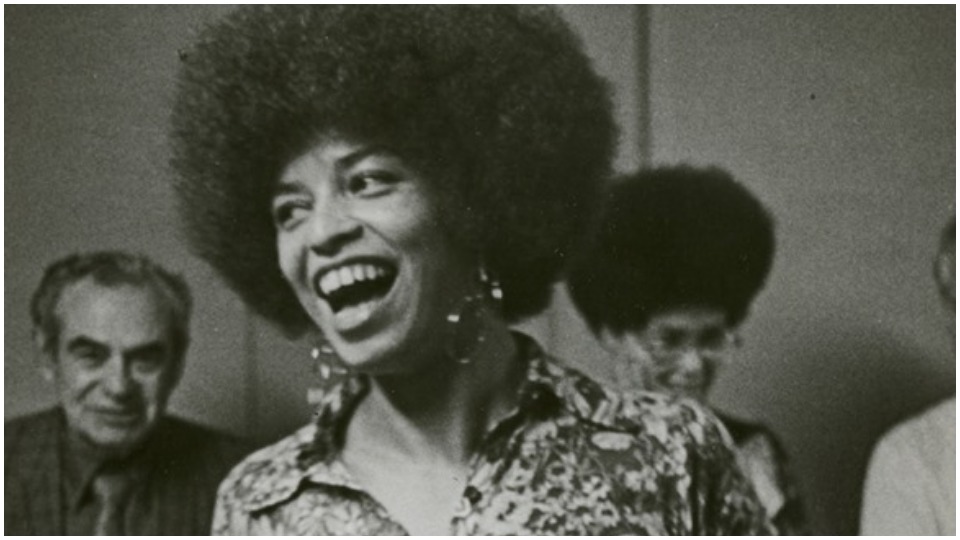
The Disobedient Ones: Re-Educating Ourselves This International Women’s Month
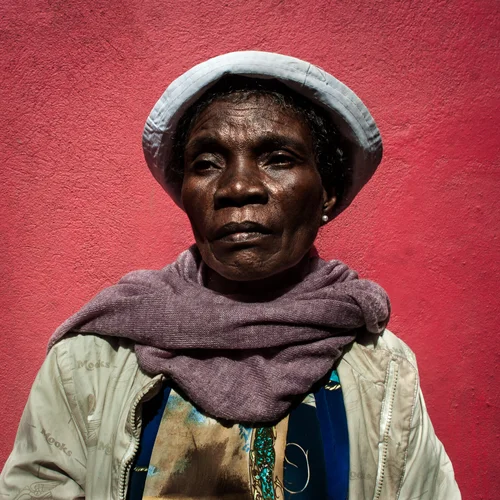
The Illusion of Progress: How the Global North Dominates Our Perception of “Growth” in All Its Senses
Subscribe for updates, newsletters, special offers and more!
And get the new ‘Why WoC need support and spaces of support’ resource + Access to our EXCLUSIVE AREA with the best we have.